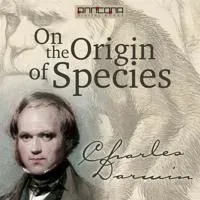
The Origin of Species by Means of Natural Selection, or the Preservation of Favoured Races in the Struggle for Life, is the full title of the 6th edition (considered as the definite) by Charles Darwin, published in 1872, is considered to be the foundation of evolutionary biology. The first edition was published in 1852. The book introduced the scientific theory that populations evolve over the course of generations through a process of natural selection. It presented a body of evidence that the diversity of life arose by common descent through a branching pattern of evolution. Darwin included evidence that he had gathered on the Beagle expedition in the 1830s and his subsequent findings from research, correspondence, and experimentation. Ideas about the transmutation of species were controversial as they conflicted with the beliefs that species were unchanging parts of a designed hierarchy and that humans were unique, unrelated to other animals. The political and theological implications were intensely debated, but transmutation was not accepted by the scientific mainstream. The book was written for non-specialist readers and attracted widespread interest upon its publication. As Darwin was an eminent scientist, his findings were taken seriously and the evidence he presented generated scientific, philosophical, and religious discussion. Within two decades there was widespread scientific agreement that evolution, with a branching pattern of common descent, had occurred, but scientists were slow to give natural selection the significance that Darwin thought appropriate. With the development of the modern evolutionary synthesis in the 1930s and 1940s, Darwin's concept of evolutionary adaptation through natural selection became central to modern evolutionary theory, and it has now become the unifying concept of the life sciences. Charles Robert Darwin, (1809-1882) was an English naturalist and geologist, best known for his contributions to evolutionary theory. Darwin published his theory of evolution with compelling evidence in his 1859 book On the Origin of Species. In 1871 he examined human evolution and sexual selection in The Descent of Man, and Selection in Relation to Sex, followed by The Expression of the Emotions in Man and Animals. His research on plants was published in a series of books, and in his final book, he examined earthworms and their effect on soil. Darwin became internationally famous, has been described as one of the most influential figures in human history, and his pre-eminence as a scientist was honoured by burial in Westminster Abbey.[WeDoBooks]
Utan abonnemang? Köp ljudboken från 59 kr ↓
Hitta din ljudbokstjänst och gå vidare. Styckköp finns också som alternativ.

Ej verifierat att titeln ingår — kontrollera hos tjänsten

Ej verifierat att titeln ingår — kontrollera hos tjänsten

Ej verifierat att titeln ingår — kontrollera hos tjänsten

Ej verifierat att titeln ingår — kontrollera hos tjänsten
Annons: Booki säljer inget själv utan länkar vidare till tjänster och butiker. Klickar du och handlar kan vi få ersättning — det påverkar aldrig priset för dig, och inte heller ordningen: tjänsterna står i samma ordning för alla titlar och butikerna rankas på pris.
The Origin of Species by Means of Natural Selection, or the Preservation of Favoured Races in the Struggle for Life, is the full title of the 6th edition (considered as the definite) by Charles Darwin, published in 1872, is considered to be the foundation of evolutionary biology. The first edition was published in 1852. The book introduced the scientific theory that populations evolve over the course of generations through a process of natural selection. It presented a body of evidence that the diversity of life arose by common descent through a branching pattern of evolution. Darwin included evidence that he had gathered on the Beagle expedition in the 1830s and his subsequent findings from research, correspondence, and experimentation. Ideas about the transmutation of species were controversial as they conflicted with the beliefs that species were unchanging parts of a designed hierarchy and that humans were unique, unrelated to other animals. The political and theological implications were intensely debated, but transmutation was not accepted by the scientific mainstream. The book was written for non-specialist readers and attracted widespread interest upon its publication. As Darwin was an eminent scientist, his findings were taken seriously and the evidence he presented generated scientific, philosophical, and religious discussion. Within two decades there was widespread scientific agreement that evolution, with a branching pattern of common descent, had occurred, but scientists were slow to give natural selection the significance that Darwin thought appropriate. With the development of the modern evolutionary synthesis in the 1930s and 1940s, Darwin's concept of evolutionary adaptation through natural selection became central to modern evolutionary theory, and it has now become the unifying concept of the life sciences. Charles Robert Darwin, (1809-1882) was an English naturalist and geologist, best known for his contributions to evolutionary theory. Darwin published his theory of evolution with compelling evidence in his 1859 book On the Origin of Species. In 1871 he examined human evolution and sexual selection in The Descent of Man, and Selection in Relation to Sex, followed by The Expression of the Emotions in Man and Animals. His research on plants was published in a series of books, and in his final book, he examined earthworms and their effect on soil. Darwin became internationally famous, has been described as one of the most influential figures in human history, and his pre-eminence as a scientist was honoured by burial in Westminster Abbey.[WeDoBooks]
Fler ljudböcker av Anncona Media ↗Adlibris säljer ljudboken för 59 kr som styckköp, vilket betyder att du äger filen utan abonnemang.
Michael Arment är uppläsare. Speltiden är 23 h 33 min.